FIFO rosters explained: 2/1, 8/6, 7/7 and what a swing is really like
In short
- A roster is written days on / days off: 8/6 means 8 days on site, then 6 days at home. A "swing" is one full cycle.
- Even-time rosters like 7/7 mean half your time on site. 2/1 means about two-thirds, so more money but more fatigue.
- A typical day on site starts before 5am. Shutdowns can stretch your swing and add night shift, and fatigue days limit how many shifts you work in a row.
- There is no best roster for everyone. Start with one that leaves you real recovery time.
What is a FIFO roster?
A FIFO (fly-in fly-out) roster is the pattern of days you spend on site and days you spend at home. It's written as days on / days off. "8/6" means 8 days on site, then 6 days off. When people write it in weeks, "2/1" means 2 weeks on, 1 week off.
A few words you'll hear straight away:
- Swing: one full roster cycle, your days on plus your days off. People also say "on swing" to mean "on site".
- R&R: rest and recreation, your days off at home.
- Even time: the same number of days on as off, like 7/7 or 2/2.
There are a lot of rosters out there. A WA parliamentary inquiry was told there are over 30 in the resources industry, and one site often runs several at once.1 The job ad or your contract will tell you which one you're on.
Common FIFO rosters at a glance
| Roster | What it means | Time on site | Notes |
|---|---|---|---|
| 7/7 | 7 days on, 7 days off | 50% | Even time. Common for maintenance crews. |
| 2/2 (14/14) | 2 weeks on, 2 weeks off | 50% | Even time. Often worked back-to-back with another person. |
| 8/6 | 8 days on, 6 days off | 57% | Pioneered by FMG in WA iron ore. Gives every second weekend at home. |
| 2/1 (14/7) | 2 weeks on, 1 week off | 67% | Typical for production workers, per a WA inquiry. More days on site per year. |
| 4/1 (28/7) | 4 weeks on, 1 week off | 80% | High compression. Flagged by a WA inquiry as a fatigue risk. |
| 5/2/4/3 | 5 on, 2 off, 4 on, 3 off (a 2-week cycle) | 64% | Sometimes written "5/2, 4/3" in job ads. Confirm the exact pattern. |
"Time on site" is simple maths (days on ÷ days in the cycle). Real numbers shift with travel days, public holidays, shutdowns and crew changes.
What does a 2:1 roster mean?
Two weeks on site, one week off (also written 14/7). You're on site about two-thirds of the year, so it usually pays more over a year than even time, but you get less recovery between swings.
What does an 8/6 roster mean?
Eight days on, six days off, a two-week cycle. The WA inquiry noted it lets workers have every second weekend at home.1
What does a 7/7 roster mean?
Seven days on, seven days off: even time, half your life on site and half at home. It's a common roster for maintenance crews, including scaffolders.
What is a 5/2/4/3 roster?
It usually means 5 days on, 2 off, 4 on, 3 off, repeating every two weeks. Some ads write it as "5/2, 4/3". If an ad uses it, ask the employer for the exact pattern and shift times.
What a day on site actually looks like
Every site runs differently, but early starts are common. A typical day shift looks something like this:
A typical day shift
- About 4:20am Wake up, breakfast at the mess, get ready.
- About 5:20am Bus to site, often a short ride.
- On arrival Everyone swipes in to site. There's usually time for a coffee.
- Prestart The crew meeting before work: the day's jobs, hazards and who's doing what. Then the shift starts.
What a whole swing looks like
A typical swing
Fly-in day. Often you fly in early in the morning, have breakfast, then go straight to work. On some sites you fly in around midday and start the next morning. The first day is often fairly easy so everyone can get back into work mode: handovers, and picking up where the other swing left off.
The middle. Fatigue builds as the swing goes on. On a 7/7 roster it tends to kick in around day 5 or 6, when you're nearly due to fly out, which is why many people find 7/7 manageable. Everyone's different.
Last day. On a roster position it's usually chill and cruisy: often half a day of normal work, then the clean-up (trucks cleaned, refuelled and washed, crib rooms and the yard cleaned) so the next swing walks into a good setup. Shutdowns are different (see below).
R&R. A week at home is plenty of time to rest, train, see people and catch up on sleep. Some people even find it too long.
Day shift, night shift and shutdowns
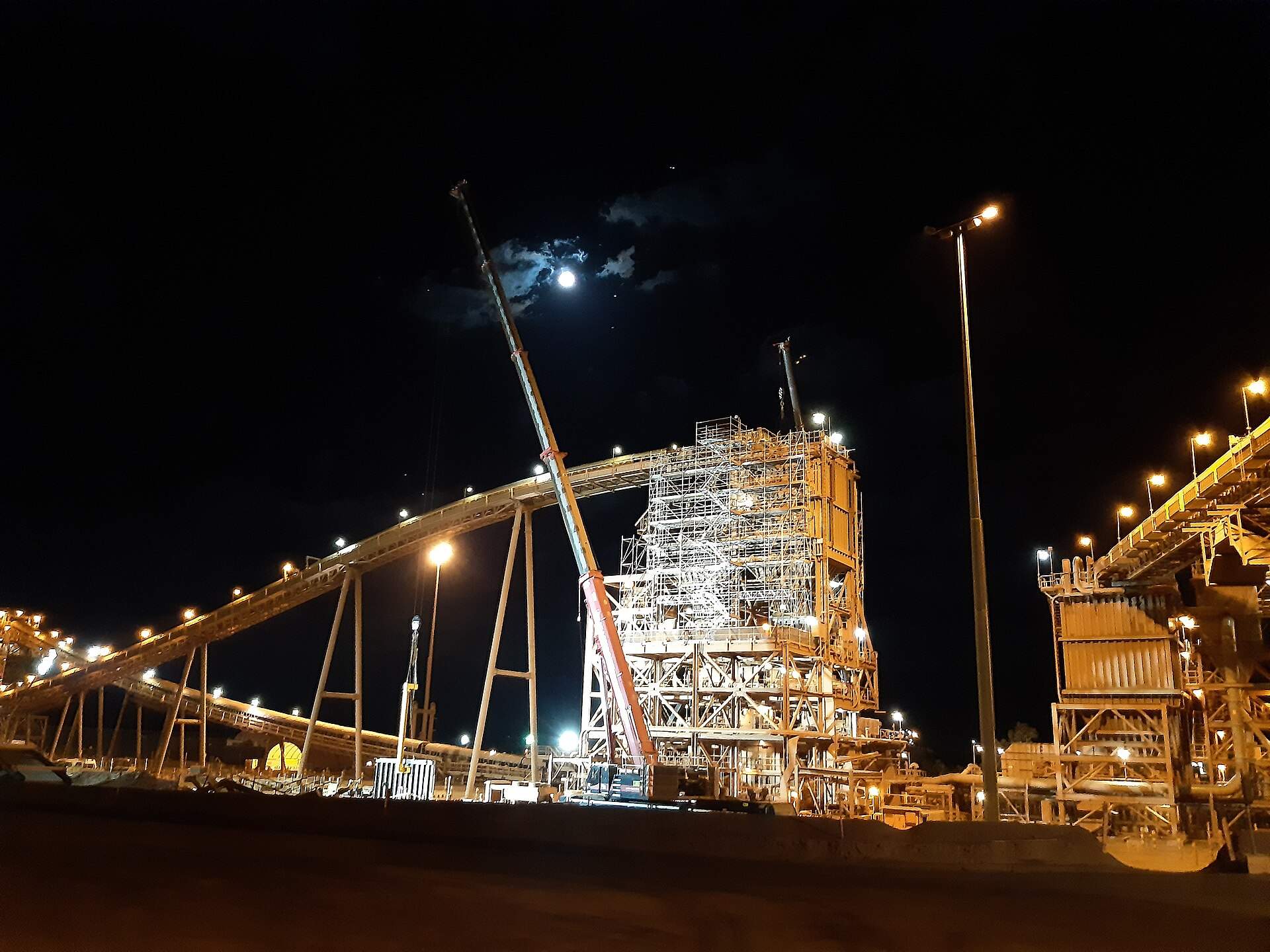
Whether you work nights depends on the job and the site. A shutdown is when a plant stops for planned repairs and maintenance. Because the machines aren't running, every hour counts, so work often runs around the clock.
How it often works
- On maintenance, many trades (scaffolding, for example) work day shift only.
- On a site-wide shutdown, extra people are flown in, and the normal roster crew often stays on too. You can end up doing a longer swing of about two weeks: the pre-shutdown week on your normal roster, then into night shift for the shutdown.
- Switching to nights comes with a stand-down day, a day off to flip your body clock. A common approach is to stay up through the night, then sleep through the day.
- The last day of a shutdown isn't always easy. If the job is behind schedule there can be heaps of work left, and the shutdown may be extended, with workers asked to stay on if they can. Demob crews from different trades stay on after the shutdown to pack up and take down what's left, like scaffolds that weren't in the way of restarting the plant. Contractors' demob crews sometimes drive the company trucks and utes to the next site or back to the company's workshop or yard.
- Coming off nights at the end of a swing, some sites fly you out straight after your last night shift in the morning. Your stand-down (the change back to normal sleep) then happens at home, and some sites pay that day too.
That's general experience, not medical advice. Night shift and long swings are recognised fatigue risks. Employers have to manage them, and your site will have its own fatigue rules.3,4 If you're struggling to switch or stay alert, tell your supervisor. That's what the system is there for.
Fatigue days: is there a limit on days in a row?
Yes, in practice. Sites manage long runs of work with fatigue days: a compulsory day off, or the end of your swing, after a set number of shifts in a row. The exact limits come from your employer's or site's fatigue management rules, so they vary.
An example from some sites
- Day shift: every 14th day has to be a day off (a fatigue day). After 14 day shifts in a row, you fly out.
- Night shift: every 7th night has to be a fatigue day. After 7 night shifts in a row, you fly out.
- This matters most on shutdowns, when a normal swing can stretch to around two weeks.
Those are site rules, not one Australia-wide law. Mining safety is regulated by each state and territory, under its own laws,6 and Safe Work Australia publishes a national model code on fatigue.4 WA's guidance, as an example, deals with FIFO night shifts directly:
- WorkSafe WA's Working hours code of practice treats long runs of FIFO night shifts as a rising fatigue risk. Its risk table puts about 6–7 twelve-hour night shifts in a row towards the higher-risk end.3
- For time off after a run of night shifts, the same table treats 48 hours as lower risk and 24 hours as the minimum.3
- Some enterprise agreements set hard limits in writing. Your contract or site induction will tell you the rules where you work.
Which roster is best for a first-timer?
Honestly, it depends on you: how strong you are mentally and physically, your sleep, and what's waiting for you at home. What the evidence says:
- A 2015 WA parliamentary inquiry into FIFO mental health found that even-time, 2 weeks on/1 off, and 8/6 rosters best support mental wellbeing. It found that more compressed rosters (like 3 or 4 weeks on, 1 off) can cause fatigue and risk workers' mental health.1
- WA has a code of practice on mentally healthy workplaces for FIFO workers, which includes rosters that leave enough time for rest.2
- More days on means more pay per year, but also less recovery. Think about whether that trade is worth it to you before you chase the bigger number.
For most entry-level jobs you won't pick the roster; it comes with the role. Read it in the job ad, and if it's very compressed, ask how fatigue is managed.
Are travel days and R&R paid?
It depends on your employer and your agreement, so check your contract. How it commonly works:
How it often works
- Fly-in and fly-out days are often paid as a full day only if you also work that day.
- If you fly in but don't work, and just stay in camp, you may only be paid for the flights.
- After a final night shift with a morning flight home, some sites pay the stand-down day at home as well. Others don't.
Don't assume the same everywhere: how travel days, stand-downs and days off are paid varies between employers and agreements. Ask before you sign.
Some agreements pay a night shift allowance (extra pay for nights). Whether you get one, and how much, depends on your agreement.
On a working holiday visa: do your days off count?
If you're counting days for a 2nd or 3rd visa, rosters matter. Home Affairs counts the 88 days (179 for a third visa) as calendar days including weekends or equivalent rest days during your period of employment.5
- On a roster: your R&R days are your rest days. On a standard full-time roster they count while you're still employed, the same way weekends do in a Monday-to-Friday job. Home Affairs' own example is 2 weeks on and 2 weeks off, standard for the industry, counting as all 28 days. Its example also says the worker is paid for the whole period, so keep your contract and roster as evidence.5
- On shutdowns: shutdowns are usually casual work in separate bursts, so only the days you work count. A normal 12-hour shift counts as one day, and one calendar day never counts as more than one. The gaps between shutdowns don't count, because you're not employed then. For example, three 14-day shutdowns count as 42 days, however long the gaps.5
- Both: separate periods of work add up, even with different employers. Public holidays and sick days count only if they're paid.5
This is general information, not visa advice. Check the official page or talk to a registered migration agent. To track your days, use the free Aussie Days 88/179-day calculator.
Tips for your first swings
- Get along with everyone. On a small site it's like a big family. Talk to people. That's how you get noticed and asked back.
- Leave the place better than you found it on your last day. The next swing notices.
- Use R&R to actually recover: sleep, train, see people. Then you're ready to go again.
Roster words you'll hear
- Swing
- One roster cycle (days on plus days off), or just your days on site.
- R&R
- Rest and recreation: your days off at home.
- Even time
- Equal days on and off, like 7/7 or 2/2.
- Back-to-back
- Two people sharing one role on opposite swings, common on even-time rosters.
- Prestart
- The crew meeting at the start of each shift.
- Crib / crib room
- Your meal break, and the room where you take it on site.
- Smoko
- A short break during the shift, like a morning tea break.
- Shutdown
- A planned stop of a plant for maintenance. Busy, often around the clock, often with extra crews flown in.
- Fatigue day
- A compulsory day off after a set run of shifts (on some sites, every 14th day shift or 7th night shift).
- Stand-down day
- A day off to reset your body clock when switching between day and night shift. On some sites, after your last night shift you fly home and have the stand-down there, sometimes paid.
- Night shift allowance
- Extra pay for working nights, if your agreement includes it.
Questions
What does an 8/6 roster mean?
You work 8 days on site, then have 6 days off at home, so a full cycle is 2 weeks. About 57% of your time is on site.
What does a 2:1 FIFO roster mean?
Two weeks on site, then one week off (also written 14/7). About two-thirds of the year is on site, so it usually earns more but is more tiring than even time.
What does a 7/7 roster mean?
Seven days on, seven days off. It is an "even time" roster: you spend half your time on site and half at home.
What is a 5/2/4/3 roster?
It usually means 5 days on, 2 off, 4 on, 3 off, repeating every two weeks. Check the exact pattern and shift times with the employer.
What is a swing in FIFO?
One full roster cycle: your days on site plus your days off at home. People also say "my swing" to mean just the days on site.
Do you work 7 days a week on FIFO?
While you are on site, usually yes: every day of the swing is a work day, weekends included, followed by a block of days off at home.
Is there a limit on how many days in a row you can work FIFO?
Usually yes, but the exact limit comes from your employer or site fatigue rules. On some sites, every 14th day shift and every 7th night shift has to be a day off, or you fly out. WorkSafe WA's working hours code treats about 6–7 twelve-hour night shifts in a row as higher risk, with at least 24 hours (better 48) off afterwards.
Do you get paid for FIFO travel days?
It depends on your employer and agreement. Fly-in and fly-out days are often paid as a full day only if you also work that day; otherwise you may only be paid for the flights. Check your contract.
Which FIFO roster is best?
It depends on you. A 2015 WA parliamentary inquiry found even-time, 2 weeks on/1 off and 8/6 rosters best support mental wellbeing, and that more compressed rosters raise fatigue risks.
Sources
- Parliament of Western Australia, Education and Health Standing Committee: “The impact of FIFO work practices on mental health” (Report 5, June 2015), Finding 21 and Recommendation 12
- WA Government: Code of practice, mentally healthy workplaces for FIFO workers in the resources and construction sectors (launched April 2019)
- WorkSafe WA: Code of practice, Working hours. Risk table for FIFO sequential night shifts and time off after nights (p. 11)
- Safe Work Australia: Managing the risk of fatigue at work (model code of practice)
- Department of Home Affairs: Specified work for Working Holiday visa (subclass 417), “Shift work”
- Safe Work Australia: Mining. Who regulates mine safety in each state and territory, and under which laws
General information only. Rosters, pay and rules depend on your employer, your agreement and your site. Your contract and site induction come first.