FIFO and mining slang dictionary
In short
- Mine sites have their own language. Knowing it before day one helps you understand prestarts, follow instructions and fit in faster.
- The words most new starters ask about: smoko (a short break), crib (your meal break and the food for it), donga (a room or site building), wet mess (the camp bar) and R&R (days off at home).
- Safety words matter most: prestart, Take 5, JSA, permit, isolation, stop work and VOC. If you hear one you don’t know, ask.
- This dictionary is grouped by topic. Each word links to the guide that explains it in more detail.
Every site has a few words of its own, and many more come from Aussie slang. Nobody expects a new starter to know them all. What matters is that you ask when you don't understand, especially when it's about safety. This dictionary covers the words you'll hear in your first weeks.
Rosters, travel and shutdowns
- FIFO (fly-in fly-out)
- Working at a remote site, living in camp for a set number of days, then flying home for a set number of days off.1 See What is FIFO?
- DIDO (drive-in drive-out)
- The same arrangement, but you drive to site. More common in Queensland and New South Wales.1
- BIBO (bus-in bus-out)
- The same again, with a company bus from a regional town to site.1
- Swing
- One roster cycle (days on plus days off), or just your days on site. "I'm on swing" means "I'm at work on site."
- Roster
- Your pattern of days on and off, written as on/off: 2/1 (two weeks on, one off), 8/6 (eight days on, six off), 7/7. See FIFO rosters explained.
- Even time
- A roster with the same number of days on as off, like 7/7 or 2/2.
- R&R
- Rest and recreation: your days off at home between swings.
- Fly-in day / fly-out day
- The day you fly into the mine at the start of a swing, and the day you fly out to go home. Fly-out day is the one everyone counts down to.
- Charter
- A flight booked just for a company's workers, often from a capital city straight to the site's airstrip. Your bag allowance comes with the ticket.
- Stand-down
- A day off to reset your sleep when you switch between day and night shift.
- Fatigue day
- A compulsory day off after a set number of shifts in a row, under the site's fatigue rules.
- Nightshift allowance
- Extra pay for working nights, if your agreement includes it.
- Shutdown (shut)
- A planned stop of part of a plant so crews can do maintenance while the machines are off. Extra workers fly in for a few weeks. "Going on a shut" means going to work on one.
- Pre-shut / post-shut
- The work before a shutdown (setting up, building scaffolds, prep) and after it (taking down, cleaning up).
- Mob / demob
- Mobilise and demobilise: getting people and gear to a job, and packing up and taking it all away afterwards. "Demob crew" are the people who stay on to do it.
Camp life
- Camp / village
- Where you live on swing: rooms, the mess, a gym, the wet mess and a camp shop.
- Donga
- A transportable building used as a room or site office. Older camps were rows of dongas, so your room may still be called "your donga".
- Mess
- The camp dining room, serving hot breakfast and dinner.
- Wet mess
- The camp bar. Drink limits are common. See alcohol at camp.
- Dry camp
- A camp with no alcohol at all.
- Crib
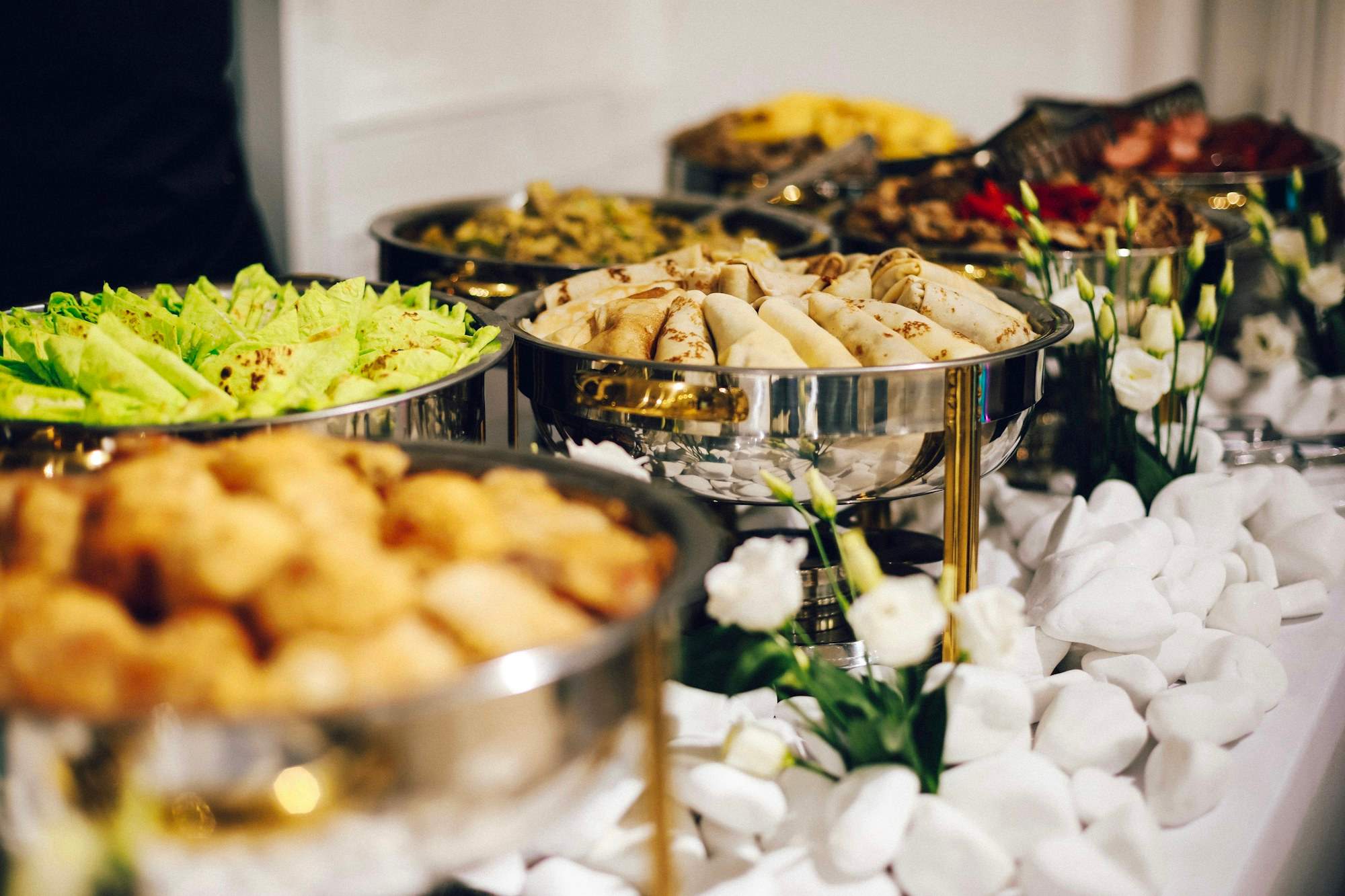
- Your meal break on shift, and the food you take for it. You pack it yourself from the camp's spread of salads, wraps, sandwiches and more.
- Crib room
- The room on site where you eat your crib and take breaks.
- Crib bag
- The cooler bag or lunchbox you carry your crib in.
- Smoko
- A short break during your shift. It comes from the old smoke break, but now just means a quick rest and a cuppa.
- Esky
- An Aussie word for a cooler box.
- Camp shop
- A small shop in camp for snacks and toiletries. Usually pricier than in town.
- Swipe card / site card
- Your ID card for getting onto site, into buildings and sometimes the wet mess, where it also tracks your drinks.
- Bus run
- The bus between camp and site at set times. Missing it is a bad look, especially early on.
Safety and paperwork
- Prestart
- The crew meeting at the start of every shift: the day's jobs, hazards, controls and who's doing what. You can be asked safety questions here at any time.
- Toolbox talk
- A short safety talk for the crew, often about one topic, like heat stress or a recent incident.
- Take 5
- A quick personal risk check you fill in before starting a task: stop, look for hazards, think about controls, and only then start.
- JSA / JHA
- Job safety analysis, or job hazard analysis: the written plan for a job, breaking it into steps with the hazards and controls for each. You sign on to it before you start.
- Permit (permit to work)
- Written permission to do higher-risk work, such as hot work, confined space entry or work at heights. The permit lists the controls that must be in place.
- Isolation
- Shutting off a machine's energy (power, pressure, product) so it can't start while people work on it.
- Lock out / tag out (LOTO), "locking on"
- Putting your personal lock and tag on an isolation point. Nobody can restart the equipment until every lock is removed, so you always remove only your own.
- Sign on
- Signing the job paperwork (JSA, permit, isolation) to show you've read and understood it.
- Stop work
- Your right to stop or refuse work if you reasonably believe it would expose you or someone else to a serious and immediate risk.2 Sites back this with a "stop work authority".
- PPE
- Personal protective equipment: hard hat, glasses, gloves, boots, hearing protection and so on. The business directing your work must provide the PPE your job needs.3
- Hi-vis
- High-visibility clothing, usually orange or yellow with reflective tape.
- AOD / D&A
- Alcohol and other drugs, or drug and alcohol. Both mean the drug and alcohol test you do before starting and at random on site.
- VOC
- Verification of competency: a check that you can safely do a task or run a machine on that site, often done on your first day before you operate anything.5
- Induction
- The safety and site training you do before you start, some of it online and some on day one.
- Greenie / green hat
- A new starter. Some sites mark new starters with a green hard hat or sticker so others keep an eye out for them.
- Spotter
- A person who watches and guides a machine or vehicle while it moves near people or obstacles.
- Exclusion zone
- A marked-off area people must stay out of, e.g. under a crane lift or around operating equipment.
- Near miss
- Something that could have hurt someone but didn't. Sites want these reported so they don't happen again.
- Incident report
- The written report after something goes wrong: an injury, damage or a near miss.
- Gas test
- Testing the air before and during confined space entry, using a gas detector.
People and roles
- Client
- The company that owns or runs the mine or plant.
- Contractor
- A company hired by the client to do part of the work. Most people on site work for one.
- Labour hire
- An agency that employs you and places you with another business. Both have duties for your safety.6
- Supervisor (super)
- Your company's boss on site. Takes jobs from the client, signs off paperwork and checks controls.
- Leading hand
- Leads a crew: plans the job, explains it, and looks after the crew's paperwork.
- TA (trade assistant)
- Helps a tradesperson: carrying, holding, prepping and cleaning up. A common entry role.
- Utility
- An all-round support role around camp or site: cleaning, laundry, stores, grounds.
- Offsider
- An assistant, especially a driller's offsider who helps a drill crew.
- Scaffy
- A scaffolder. Scaffolding needs a high risk work licence (SB, SI or SA).4
- Sparky
- An electrician.
- Fitter
- A mechanical tradesperson who installs and repairs machinery.
- Boily
- A boilermaker: cuts, shapes and welds metal.
- Dogman
- A dogger: slings loads and directs crane operators. Needs a dogging licence (DG).4
- Rigger
- Sets up rigging and lifting gear for cranes. Rigging licences are RB, RI and RA.4
- Operator
- Drives or runs machinery, such as haul trucks, excavators, loaders or plant equipment.
- HSE / safety advisor
- Health, safety and environment staff who check jobs, run safety programs and investigate incidents.
The site and the plant
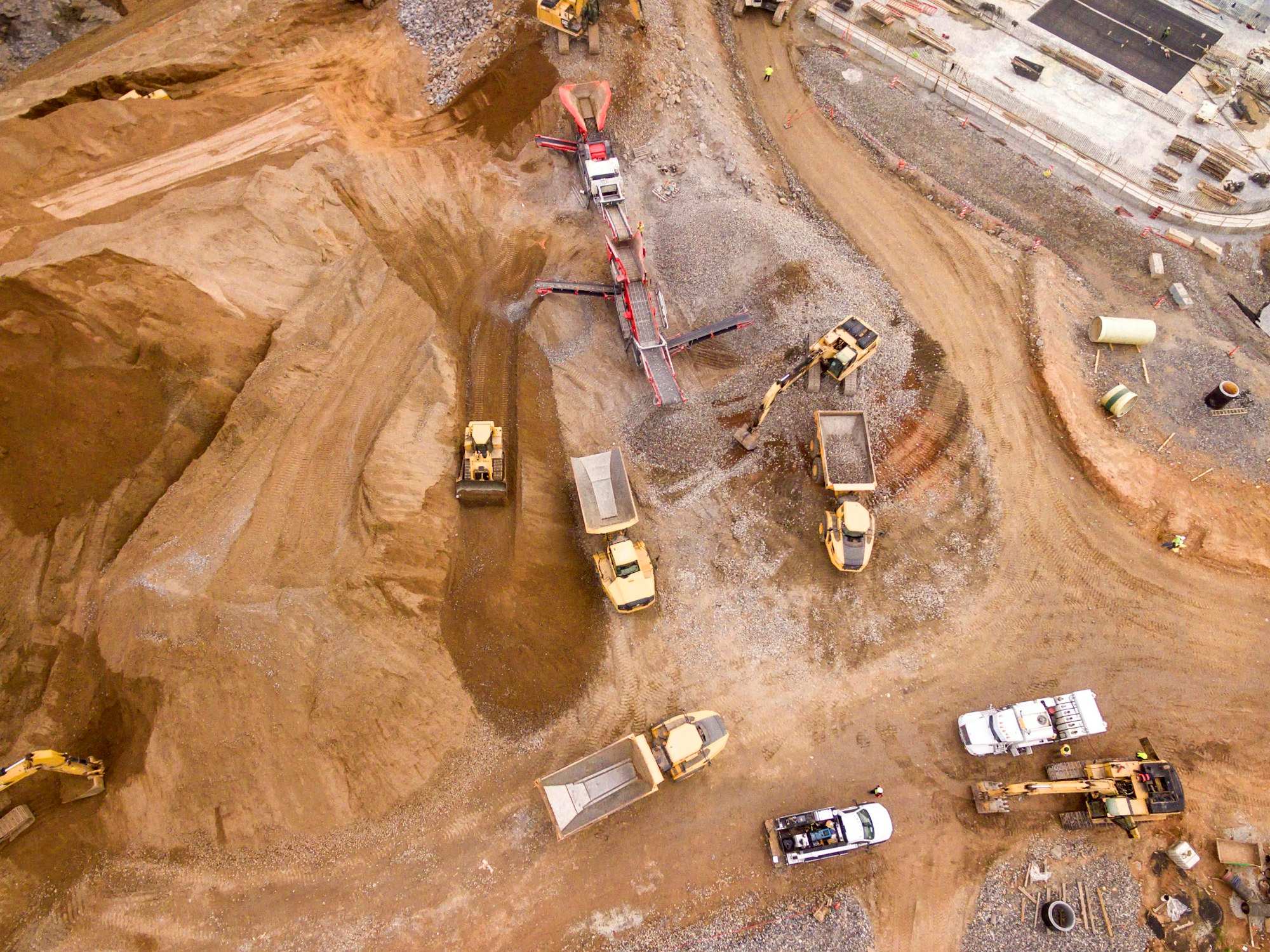
- Pit
- The open-cut mine itself, where ore and waste rock are dug out.
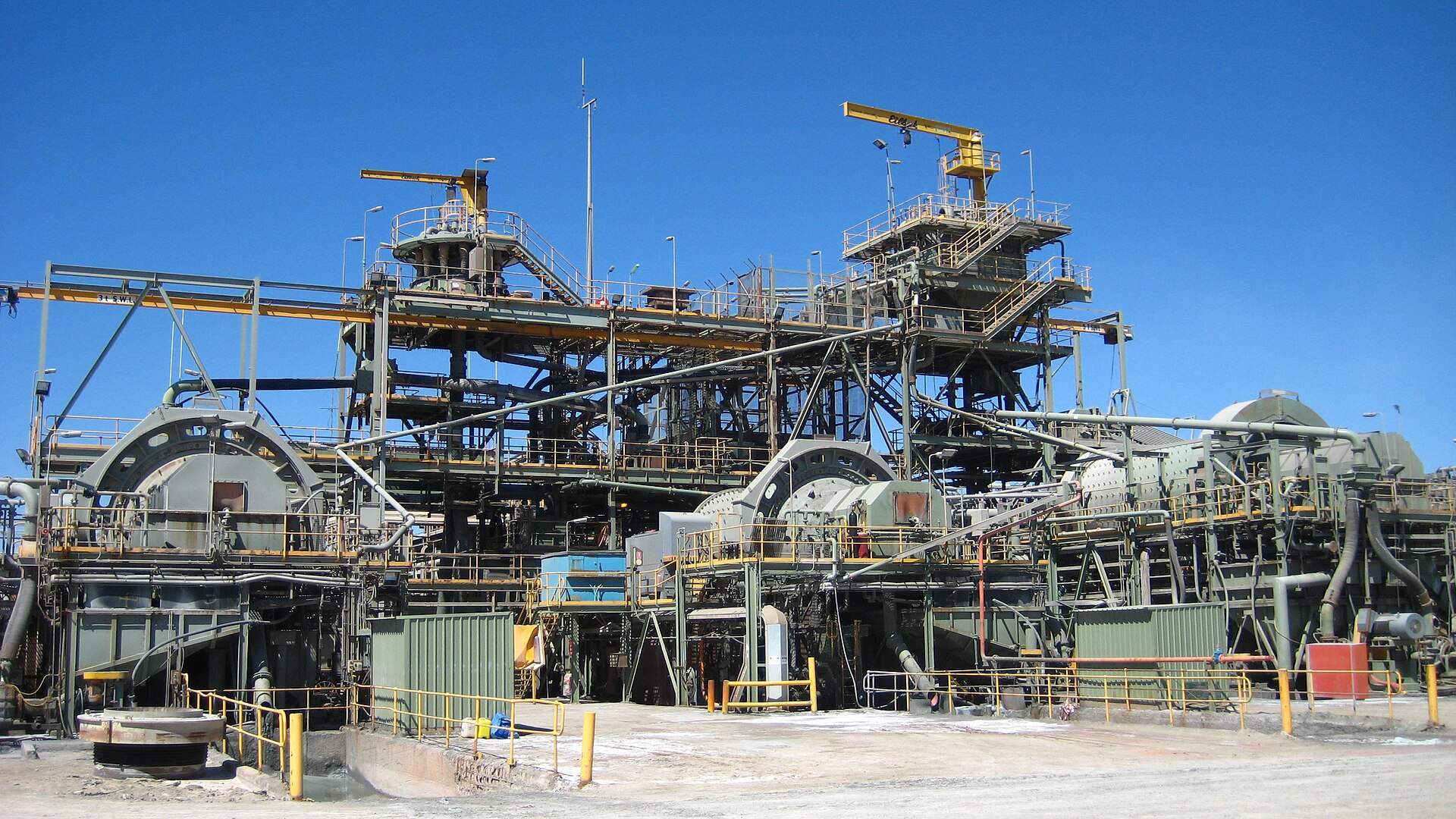
- Plant
- The processing plant, where ore is crushed and processed. Also used for machinery in general ("mobile plant").
- ROM pad
- Run-of-mine pad: the area near the crusher where haul trucks dump ore from the pit before processing.
- Crusher
- The machine (and building) that breaks ore into smaller pieces.
- Conveyor
- A long belt that carries ore between parts of the plant.
- Stockpile
- A big pile of ore or product waiting to be processed or shipped.
- Haul road
- The roads haul trucks use. They have strict rules, and light vehicles give way.
- LV (light vehicle)
- A ute or four-wheel drive used on site. Driving one usually needs an Australian licence and a site VOC.
- Haul truck
- A giant dump truck that carries ore and waste out of the pit.
- Ute
- A utility vehicle: a car with an open tray at the back.
- Laydown yard
- An area where materials and gear are stored before they're used on a job.
- Workshop
- Where machinery is maintained and repaired.
- Tailings
- The leftover ground-up rock and water after the valuable mineral has been taken out, usually stored in a tailings dam.
How to pick up the lingo fast
- Ask. If a word comes up in a prestart and you don't know it, ask straight after. Nobody minds a greenie asking. They mind someone guessing.
- Listen to the radio before you speak on it. Every site has its own call signs and habits.
- Watch out for site-specific names for areas, roads and equipment. Your induction and buddy will cover them.
Want the full picture of a swing? Read What is FIFO?, then FIFO rosters explained.
Questions
What does smoko mean?
Smoko is a short break during your shift, usually mid-morning. The name comes from the old smoke break, but these days it just means a quick rest, a drink and a snack.
What is a donga?
A donga is a transportable building used as a room or site office. Older mine camps were made of rows of dongas, so people still call their camp room “my donga”.
What does DIDO mean?
DIDO stands for drive-in drive-out: the same arrangement as FIFO, but you drive to site instead of flying. It’s more common in Queensland and New South Wales, where many mines are within driving distance of towns.
What is crib in mining?
Crib is your meal break on shift, and also the food you take for it. You pack your crib from the camp’s crib room or lunch spread and eat it in the crib room on site.
What is a wet mess?
The wet mess is the camp bar, where alcohol is served after shift, usually with drink limits. A dry camp has no alcohol at all.
What is a greenie on a mine site?
A greenie (or green hat) is a new starter with little or no site experience. Some sites mark new starters with a green hard hat or sticker, and greenies are expected to ask questions and stick close to their buddy.
What does R&R mean in FIFO?
R&R means rest and recreation: your days off at home between swings. On a 2/1 roster, for example, you get a week of R&R after two weeks on site.
What is a ROM pad?
ROM stands for run of mine. The ROM pad is the area near the crusher where haul trucks dump ore from the pit before it’s processed.
Sources
- Parliament of Australia, House Standing Committee on Regional Australia: “Cancer of the bush or salvation for our cities?” (2013), chapter 1: FIFO, DIDO, BIBO and SISO
- Work Health and Safety Act 2020 (WA), s 84: right of a worker to cease unsafe work
- WA Work Health and Safety (General) Regulations 2022, reg 44: personal protective equipment
- WorkSafe WA: High risk work licence classes (dogging DG; rigging RB, RI, RA; scaffolding SB, SI, SA)
- WA Department of Mines: What is competency and how is it verified (verification of competency)
- WorkSafe WA: Labour hire arrangements
General information only. Rosters, pay and rules depend on your employer, your agreement and your site. Your contract and site induction come first.